BHMS Pastry, Chocolate & Bakery · Lucerne, Switzerland
Pastry as the whole degree — not the dessert module
BHMS runs pastry, chocolate and bakery programmes in Lucerne, Switzerland — from a 10-week certificate to a Bachelor of Arts in Culinary Arts and Patisserie, hands-on in entremets, viennoiserie, tempered chocolate and sugar showpieces, taught entirely in English. Every programme year includes a six-month paid internship at CHF 2'404/month gross minimum.
Bachelor's dual award with Robert Gordon University, Aberdeen (UK)
- Admissions replies within 72 hours
- WhatsApp admissions — no obligation to apply
- Every programme year includes a paid internship
- 330 kitchen hours in Year 1
- A six-month paid internship every programme year
- CHF 2'404/month gross minimum
- 10:1 students per chef instructor
- 7 professional kitchens
- Bachelor's dual award with Robert Gordon University, Aberdeen (UK)
- Taught entirely in English
Why here
What the pastry track actually gives you
330
kitchen hours in Year 1 alone — pastry, bakery and chocolate labs, not general cookery
3
six-month paid internships across the bachelor — one after every taught semester
CHF 43'000
approximate gross internship earnings across those three placements at the 2027 Swiss minimum
10:1
students per chef instructor on the pastry programme
7
professional kitchens, including dedicated pastry and chocolate labs
2
awards at bachelor graduation — BHMS and Robert Gordon University, Aberdeen (UK)
Fees and rates as published by BHMS for 2027. Internship earnings are a calculation from the CHF 2'404/month gross Swiss minimum, not a published headline figure, and are before deductions for board, lodging and social insurance.
Your path
Four ways in. One craft.
Every rung is a complete qualification. Stop when you have what you came for, or climb to the degree.
- CHF 43'272
- earned so far, gross
- 630
- kitchen hours logged
- 3
- awards in hand
- Year 1 · Semester 1 In the pastry labs Taught in Lucerne: pastry, bakery and chocolate labs. 330 kitchen hours
- Year 1 · Semester 2 Paid internship Six months, in Switzerland or worldwide. CHF 2'404 a month, gross minimum
- Diploma in Pastry, Chocolate and Bakery Year 1, all-inclusive: CHF 40'200
- Year 2 · Semester 3 Back in the labs Entremets, pralines, plated desserts and showpieces. 300 kitchen hours
- Year 2 · Semester 4 Paid internship A second six-month paid internship. CHF 2'404 a month, gross minimum
- Higher Diploma in Pastry, Chocolate and Bakery Year 2, all-inclusive: CHF 41'200
- Year 3 · Semester 5 The academic semester Design, innovation, product development and management.
- Year 3 · Semester 6 Paid internship A third six-month paid internship, then graduation. CHF 2'404 a month, gross minimum
- BA in Culinary Arts and Patisserie Year 3, all-inclusive: CHF 42'200
CHF 2'404 a month is the gross minimum under the national labour agreement at the 2027 rate, before board, lodging and social insurance. How the Swiss internship model works
10 weeks instead: Certificate in Pastry, Chocolate and Bakery · 180 kitchen hours · CHF 23'025
How it works
Apply in 2 minutes. Confirm your place. Fly to Lucerne.
- 1
Apply
A two-minute online form, or a message on WhatsApp. Admissions reviews it and replies within 72 hours.
- 2
Confirm
Accept your Letter of Acceptance and secure your place with a deposit. BHMS issues every visa document you need — allow up to 12 weeks.
- 3
Arrive
Fly into Zurich, get met at the airport, and start your first kitchen module in Lucerne.
Watch
Pastry at BHMS, on film
Official BHMS films — press play on any card.
The craft
What you will have your hands in
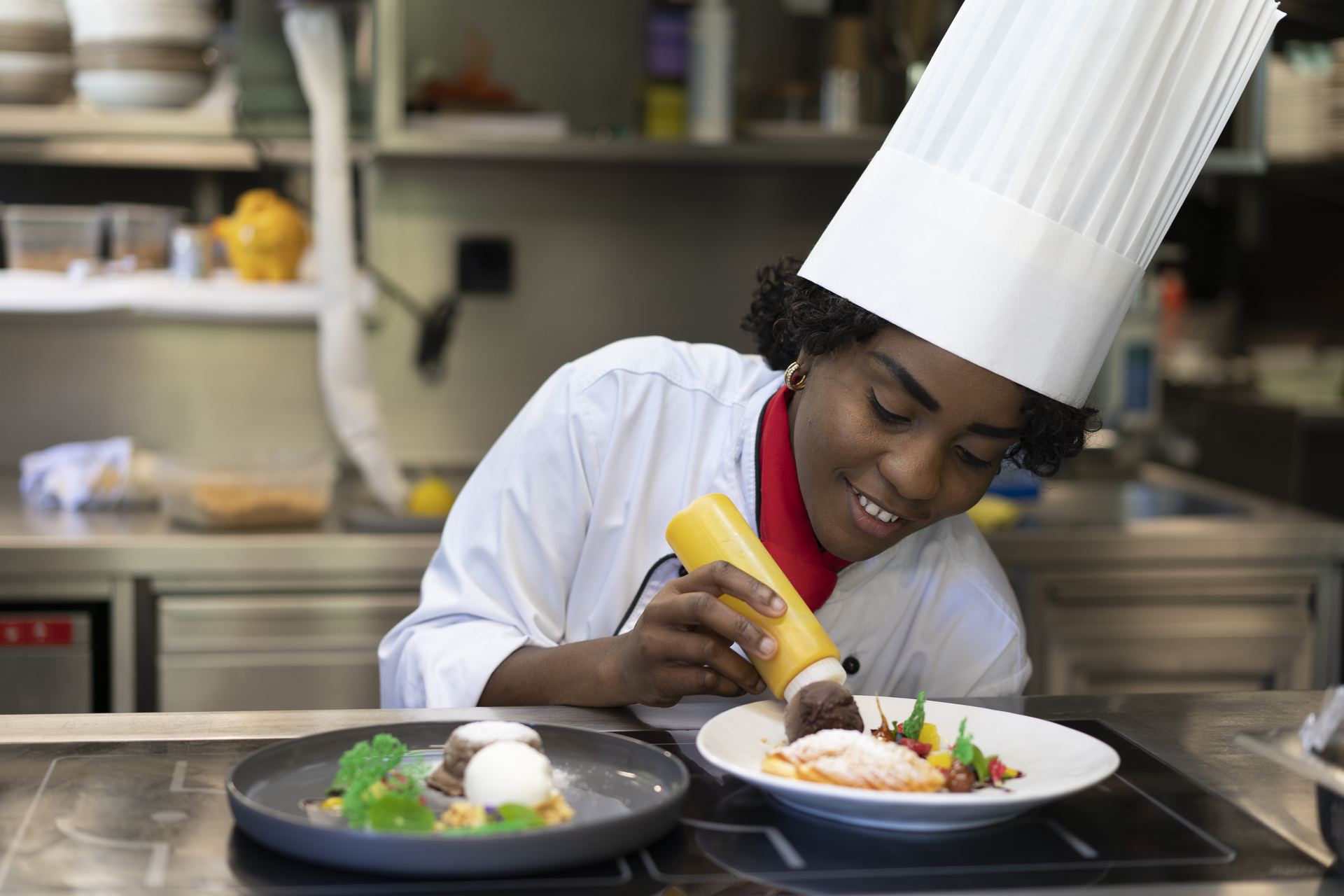
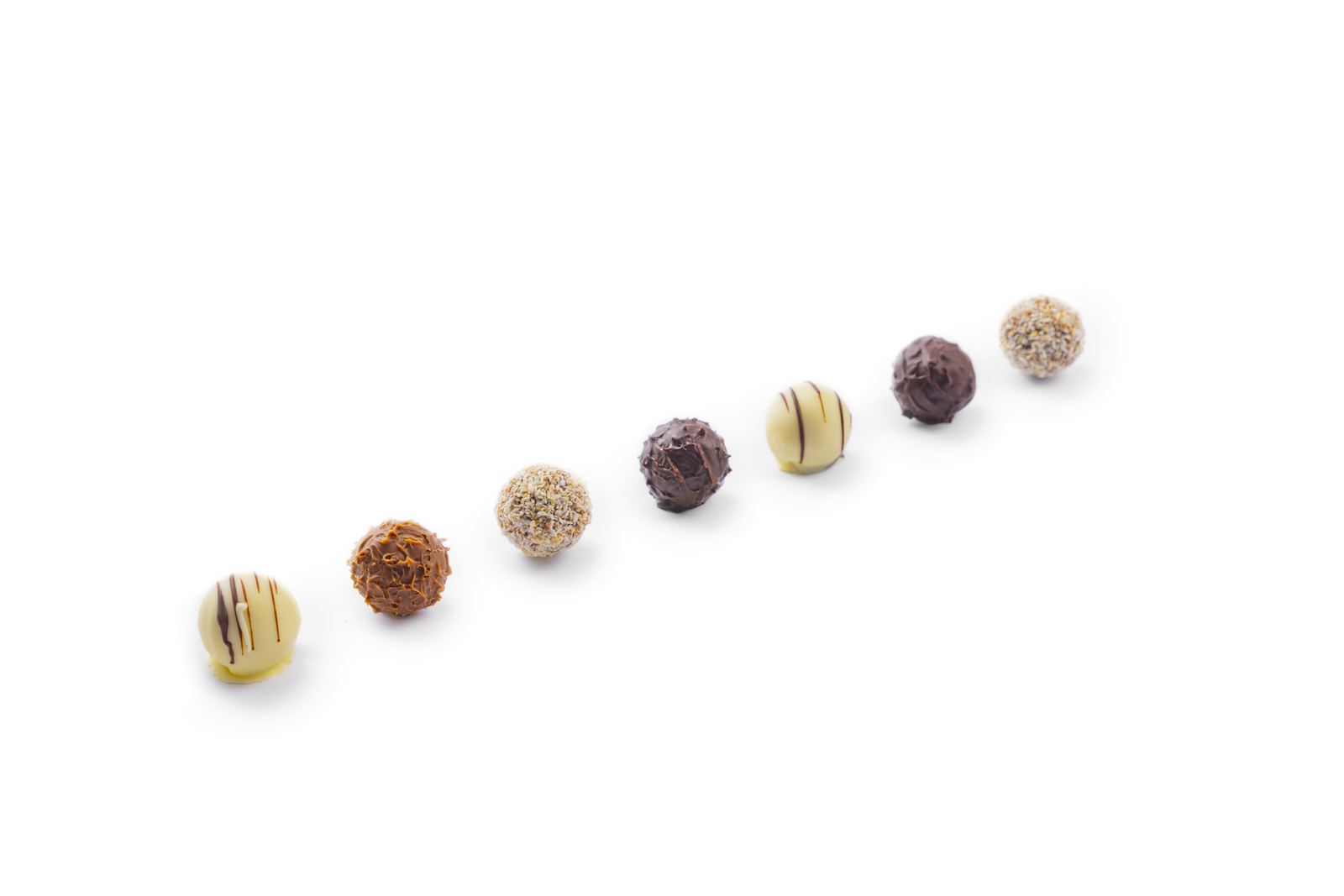
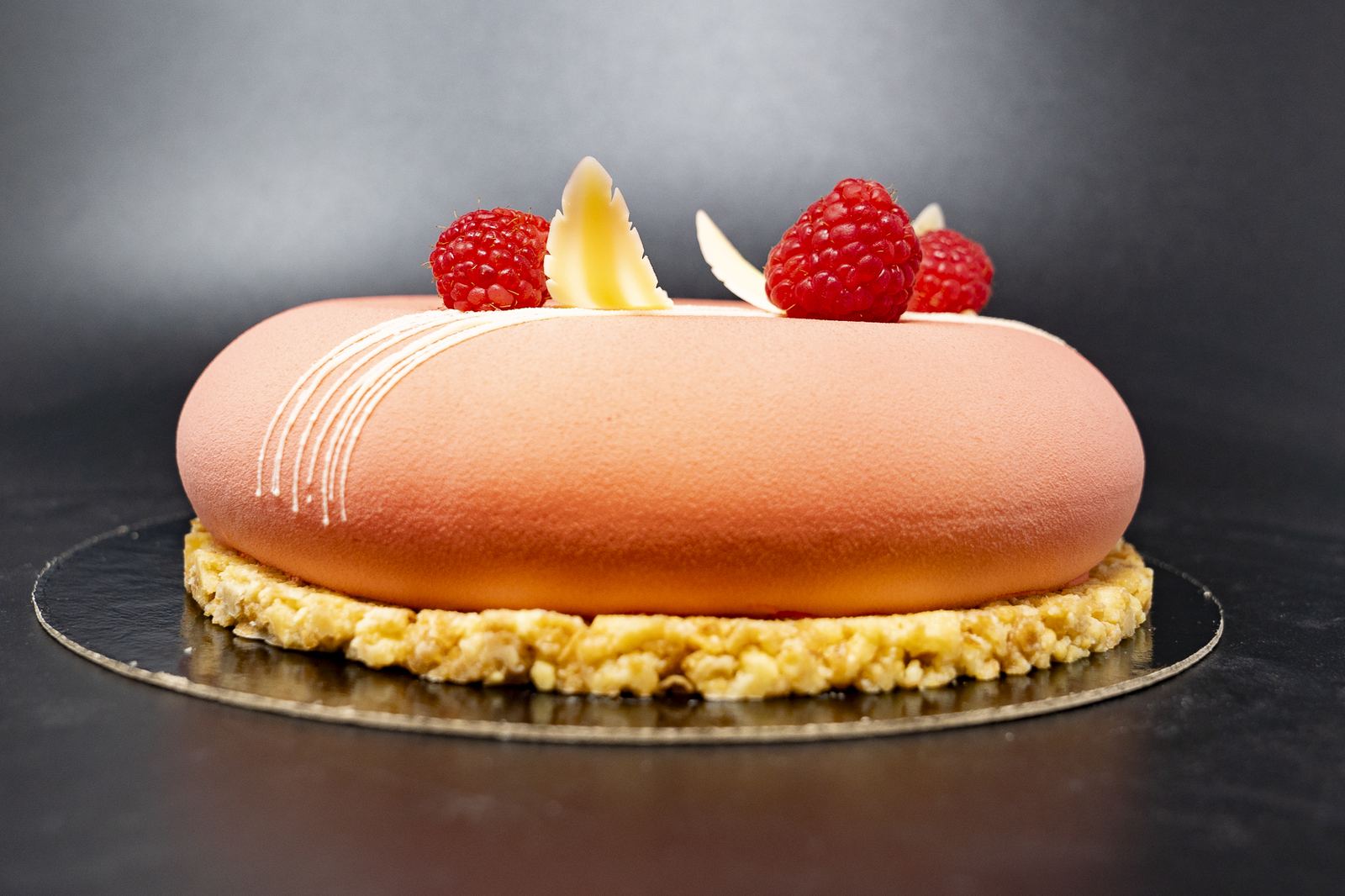
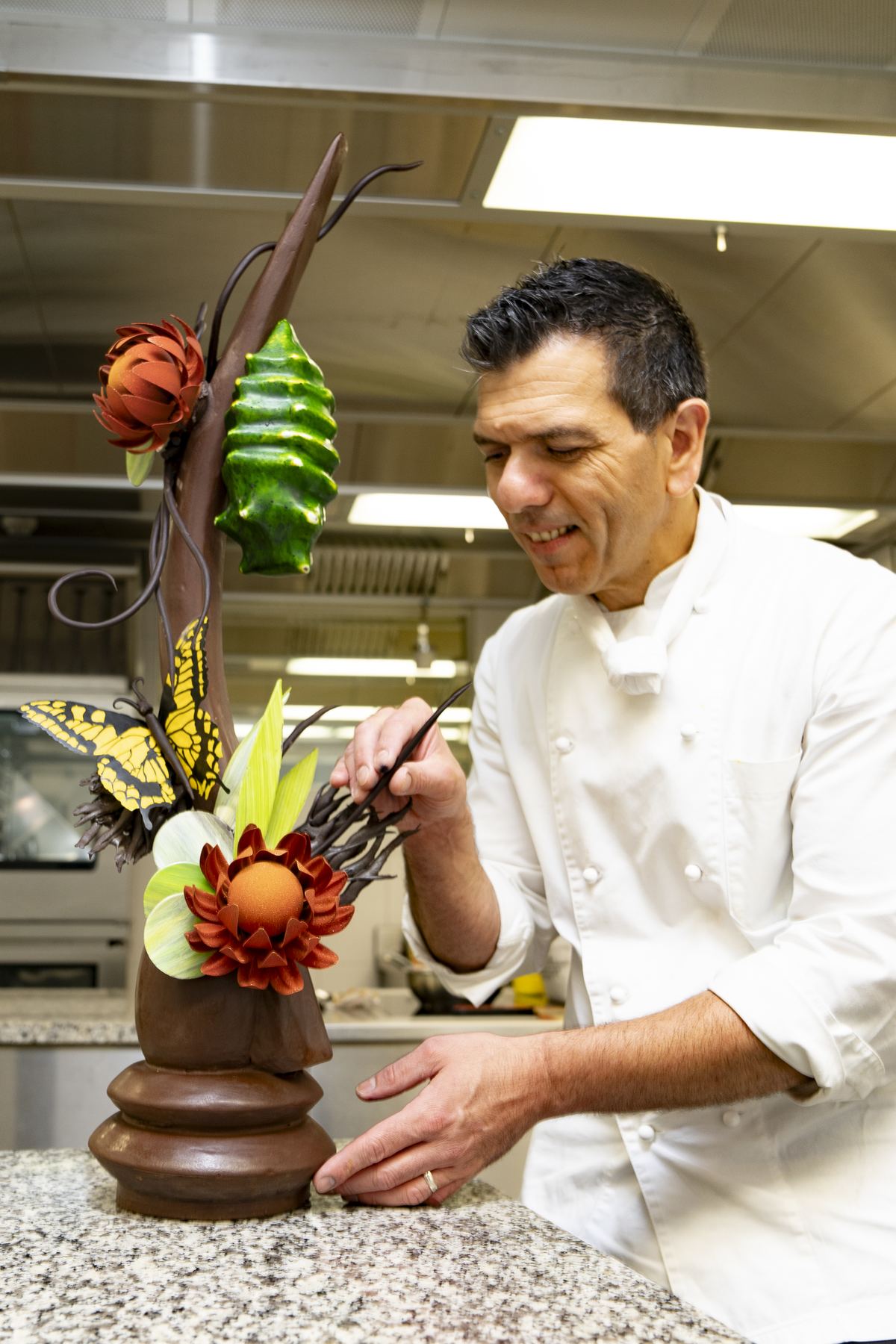
The labs are named for what you make in them. Year 1 covers pastry and bakery foundations, classic patisserie, boulangerie and viennoiserie, traditional European cakes and chocolate work foundations. Year 2 moves to ice creams and plated desserts, advanced chocolate pralines, petits fours and petits gâteaux, entremets cakes, and the art of showpieces.
By the end of Year 2 you have logged 630 hours at a bench — and spent a year of that in real production kitchens, paid.
Inside the pastry kitchens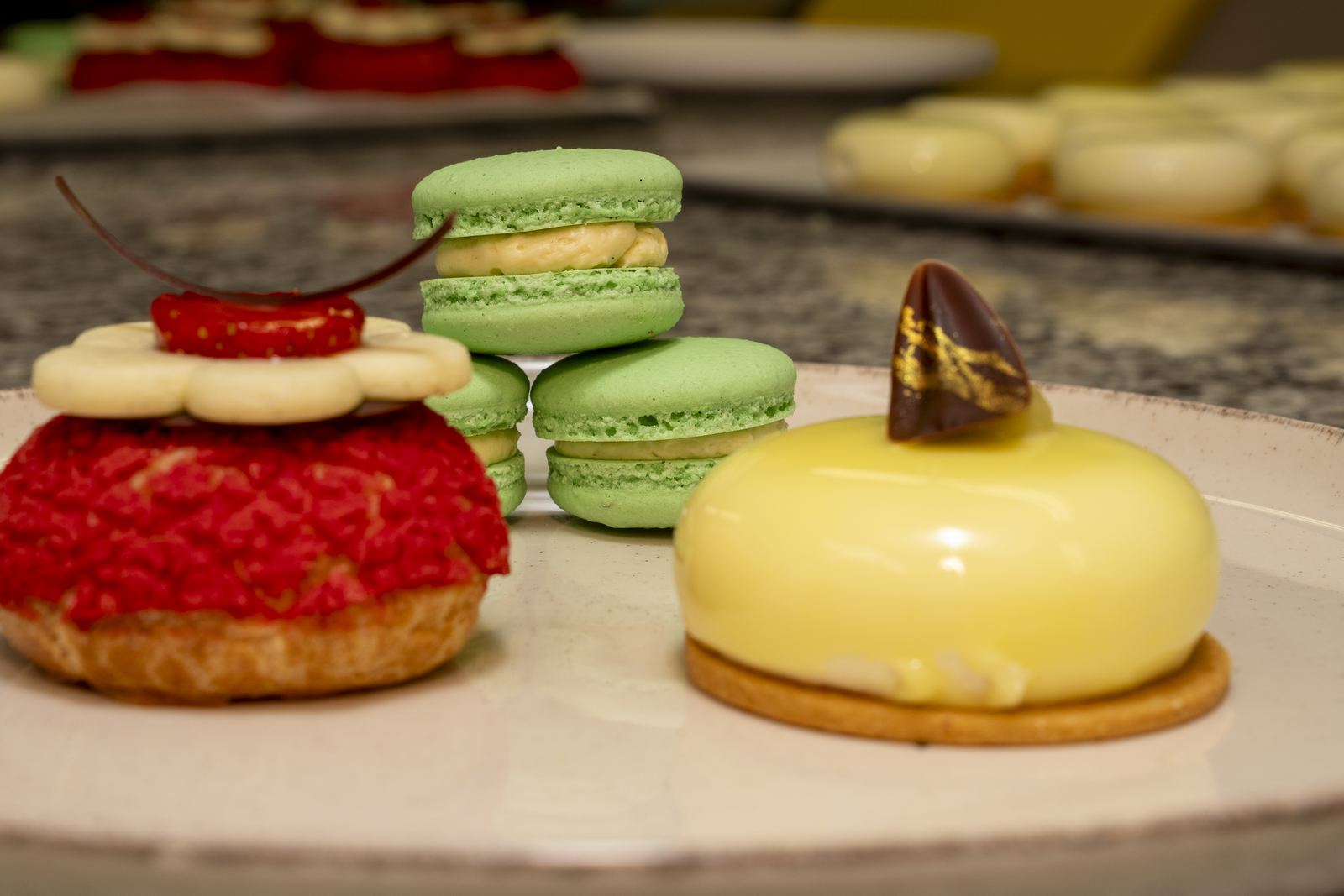
Earn while you learn
Six months in. Six months paid.
Every taught semester is followed by a six-month paid internship. In Swiss hospitality this is not goodwill — it is the national labour agreement: interns from recognised schools earn a gross minimum of CHF 2'404 per month at the 2027 rate.
3 internships × 6 months × CHF 2'404 gross ≈ CHF 43'000
BHMS states the net remainder after board, lodging and social insurance is around CHF 1'500 a month in the countryside with accommodation and meals provided, or roughly CHF 800–1,000 in a large city without them.
How the Swiss internship model works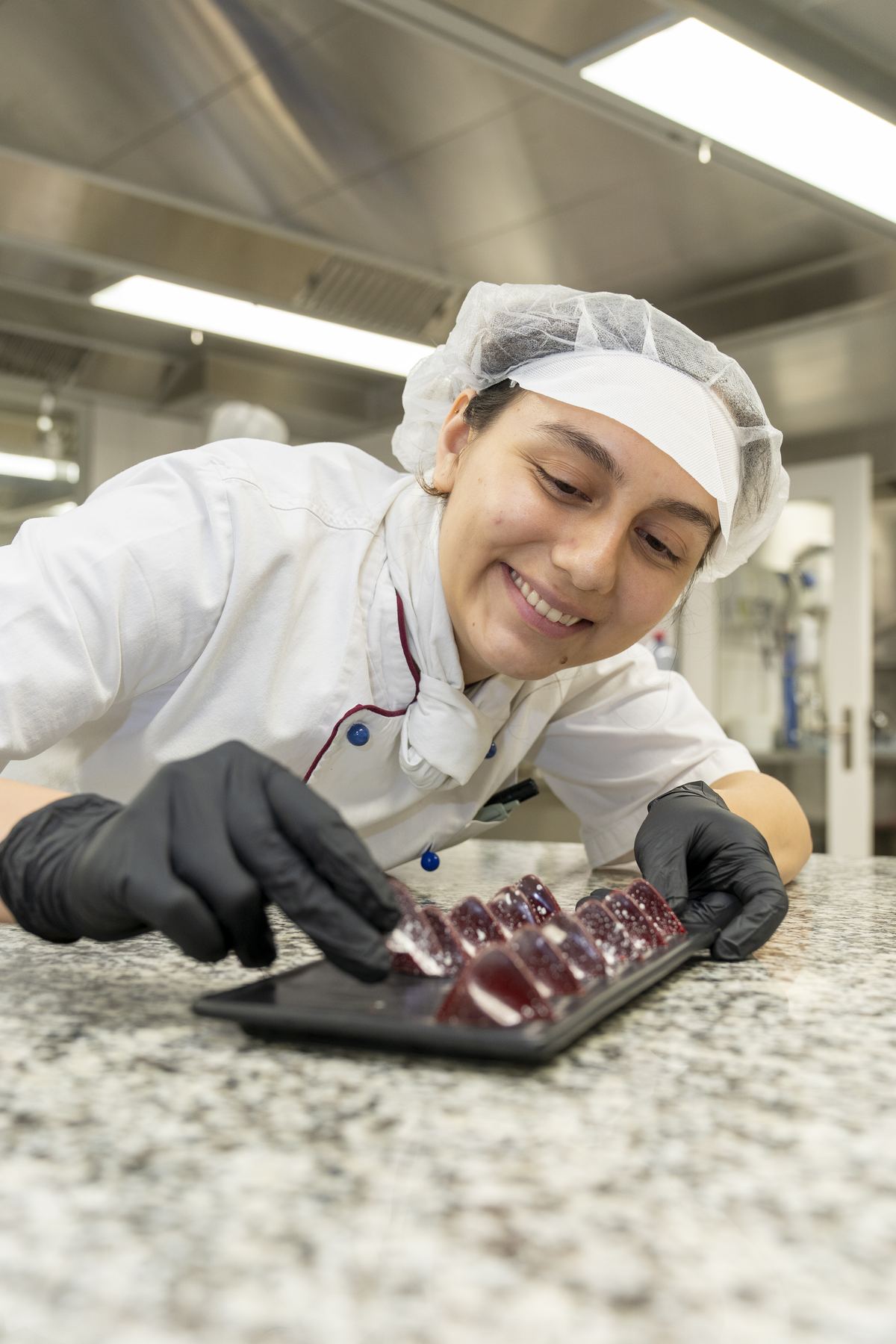
The rare part
A bachelor's degree that says patisserie on it
BHMS's Bachelor of Arts in Culinary Arts and Patisserie is a three-year, English-taught degree specialised in patisserie — a dual award with Robert Gordon University, Aberdeen (UK), and one of a small number of bachelor-level patisserie qualifications taught entirely in English worldwide. Most pastry training elsewhere stops at diploma or certificate level, or sits inside a general culinary degree. And if the savoury kitchen calls you more than the sweet one, the same school runs a full culinary school in Switzerland with its own programme ladder.
180 ECTS / 360 UK credits over three years, structured as three taught semesters each followed by a six-month paid placement.
The BA in detail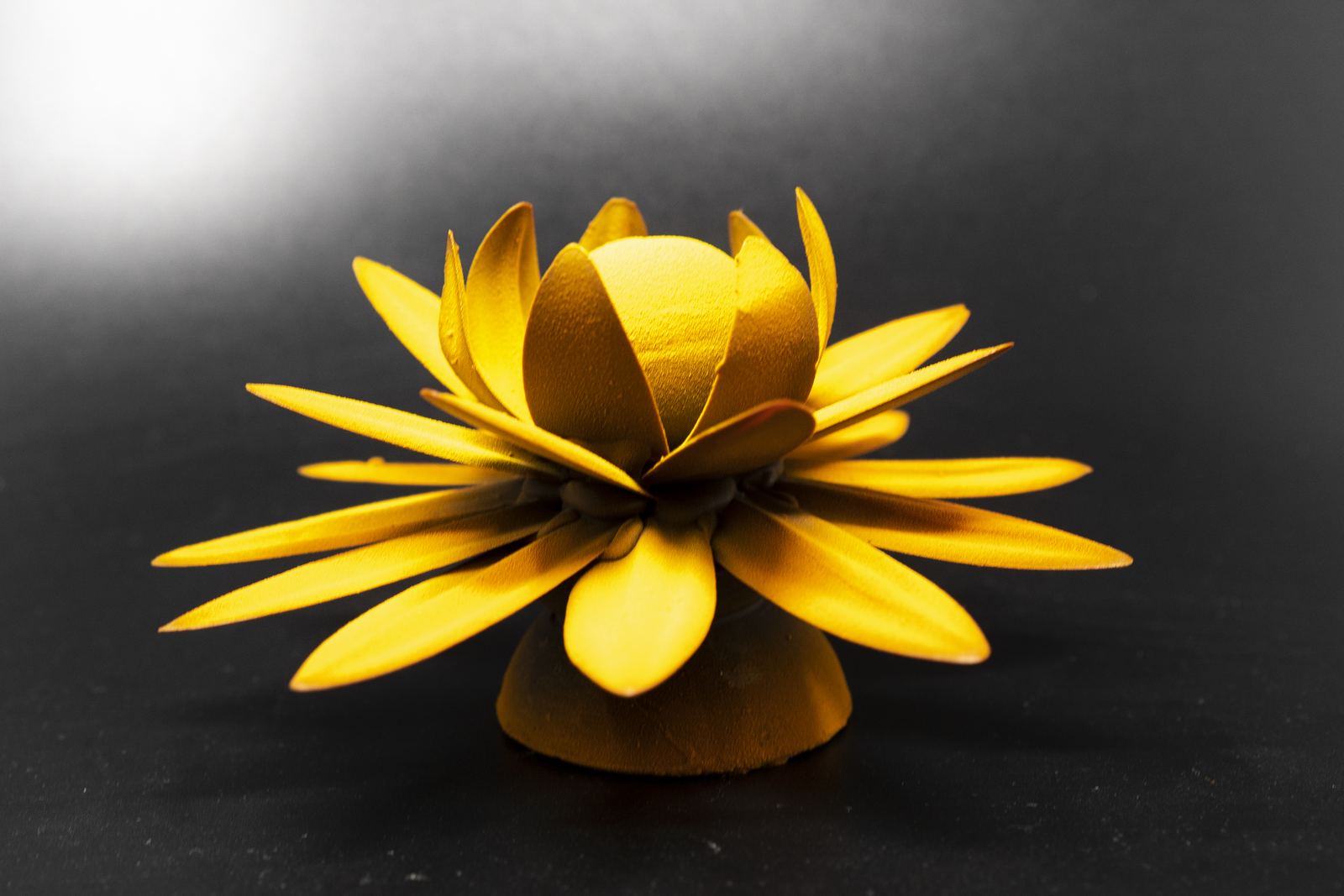
Not sure which rung
Two minutes, one honest answer
Tell us where you are now and what pulls you — chocolate, cakes, bread or plated desserts — and we will tell you which programme fits, including when it does not.
Take the 2-minute fit checkGuides
Chocolate, careers and the craft
Chocolate
Swiss chocolate: history, how it’s made, the names to know
Cailler, Suchard, Peter, Lindt and Tobler: how a small country became the home of milk chocolate, and how chocolate is made today.
Study
Baking school in Switzerland
Professional bread, viennoiserie, pastry and chocolate training in English: what you learn, what it costs, the paid internship.
Careers
Pastry chef salary
What pastry chefs and bakers earn in the US and in Switzerland, from official wage data, with CHF and US dollar figures.
Careers
How to become a pastry chef
The routes into a pastry kitchen (school, apprenticeship, on the job), how long each takes, and the certifications that count.
Compare
Pastry schools in the world, Europe and Switzerland
A factual overview of well-known pastry schools: where they are, what they teach, how long, in which language. No invented rankings.
Baking
Three Kings cake (Rosca de Reyes)
The Epiphany bread of Mexico and Spain: where it comes from, how it differs from a New Orleans king cake, and a professional recipe.
All guides · Guías en español: curso de repostería, chocolate suizo, rosca de Reyes
Questions
Is the internship really paid? What degree do I graduate with? Do I need experience?
Can I study pastry on its own, or is it part of a culinary course?
On its own. Pastry, chocolate and bakery is a separate track at BHMS with its own labs, its own modules and its own awards — from a 10-week certificate to a Bachelor of Arts in Culinary Arts and Patisserie. You are not doing general cooking with a dessert module bolted on: Year 1 alone is 330 kitchen hours built around pastry and bakery foundations, classic patisserie, boulangerie and viennoiserie, traditional European cakes and chocolate work.
Is the pastry internship really paid?
Yes. In Switzerland, interns from recognised schools are entitled under the national hospitality labour agreement (L-GAV) to a gross minimum of CHF 2'404 per month — the rate from January 2027, before deductions for board, lodging and social insurance. BHMS states students typically keep around CHF 1'500 net per month with employer-provided accommodation and meals, or roughly CHF 800–1,000 in a big city without them. Every programme year includes a six-month placement.
What degree do I actually graduate with?
The three-year path ends in a Bachelor of Arts in Culinary Arts and Patisserie — a dual award from BHMS and Robert Gordon University, Aberdeen (UK), totalling 180 ECTS / 360 UK credits. A bachelor-level degree specialised in patisserie and taught entirely in English is one of a small number worldwide. You can also stop after Year 1 or Year 2 with a full Diploma or Higher Diploma in hand.
Do I need any pastry experience to start?
No. The Diploma year begins with Pastry and Bakery Foundations and Chocolate Work Foundations — they assume no professional background. Entry requirements are age 17 or above, a completed secondary school education, and English at IELTS 5.0 level or equivalent. A Preparatory English Programme is available if you are not there yet.
How much does it cost?
The BHMS pastry pathway costs CHF 40'200 for Year 1 (Diploma), CHF 41'200 for Year 2 (Higher Diploma) and CHF 42'200 for Year 3 (BA) — CHF 123'600 across the full bachelor. Every figure is all-inclusive: tuition, operating costs, living expenses, application fee and uniforms/equipment in a single published figure. Against that sits roughly CHF 43'000 gross in internship earnings over the three placements. The 10-week certificates are CHF 23'025.
When can I start?
Published intakes are November 2026 · February 2027 · August 2027. Visa processing can take up to 12 weeks, so plan to apply around four months before the intake you want.
Watch
See it for yourself
Next step
Three intakes a year. One decision that pays you back.
Next intakes: November 2026 · February 2027 · August 2027 · Lucerne, Switzerland
Every programme year pairs a taught semester with a six-month paid internship — CHF 2'404/month gross minimum in Switzerland under the national hospitality labour agreement. How the internship model works